
Impact
Impact
Between June 2025 and July 2026
The research behind our approach
Decades of rigorous, peer-reviewed research demonstrates that well-designed financial education programs can improve young people's knowledge of basic financial concepts, increase their likelihood of engaging in positive financial behaviors, and reduce their susceptibility to predatory lending. The Niche Clinic draws on the following literature to develop, evaluate, and refine our programming. We also contend that our program has the potential to impact youth in a manner that extends beyond financial wellbeing.
Financial Knowledge and Behavior
A meta-analysis of 76 randomized experiments with a sample size of 160,000 individuals indicated that financial education programs have, on average, positive causal treatment effects on financial knowledge and downstream financial behaviors.
Kaiser and Menkhoff, National Bureau of Economic Research, 2020Experiential Learning Works Best
Studies indicate that the impact appears strongest when financial literacy is taught using interactive, experiential methods rather than purely theoretical approaches, and when integrated with practical opportunities to apply learned concepts.
Fraser, S.P., Financial Services Review, 33(4), 48-61, 2025Diversion Programs Work
Petrosino et al. ran a meta-analysis of 30 studies conducted over the previous 40 years that compared youth who were formally processed to youth who received diversion. The review concluded that diversion programs are effective in reducing recidivism arrest, and that they become more effective when youth also receive services like those offered by The Niche Clinic.
Petrosino et al., meta-analysis of 30 studies, 2010Summer Jobs Reduce Violence
Summer jobs programs, like the one run by The Niche Clinic, can significantly reduce the chance that a youth will encounter the justice system through a violent offense.
Heller, S.B., Science, 346(6214), 2014Financial Capability Drives Violence Reduction
Improving financial capability is a key driver of violence reduction, and there is no better way to build financial capability than through a hands-on program that connects youth with financial institutions.
Muat, S., Mahdzan, N.S. and Sukor, M.E.A., Humanities and Social Sciences Communications, 2024Savings and Self-Efficacy = College Access
Teens who expect to graduate from a four-year college, and have designated a portion of their savings for college, are approximately three times more likely to attend college than those with no account. Research shows that an intervention like ours, combining financial access with self-efficacy supports like bank account access and coaching, produces improved self-efficacy and reduced risk-taking behavior.
Lee, Stucklin et al., Campbell Systematic Reviews, 2020Justice-involved youth who participate in The Niche Clinic are at significantly lower risk of experiencing subsequent encounters with law enforcement when compared to their non-participating peers.
The Niche Clinic in the Press
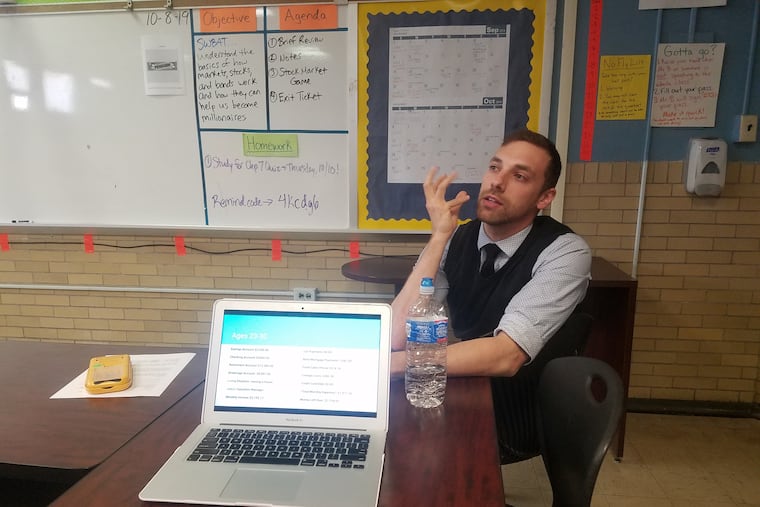 Philadelphia Inquirer
Olney High School students work, earn between $50 and $5,000 and take personal finance classes with Dan LaSalle. It's so popular he wants funding to expand the program to an entire class.
Read Article →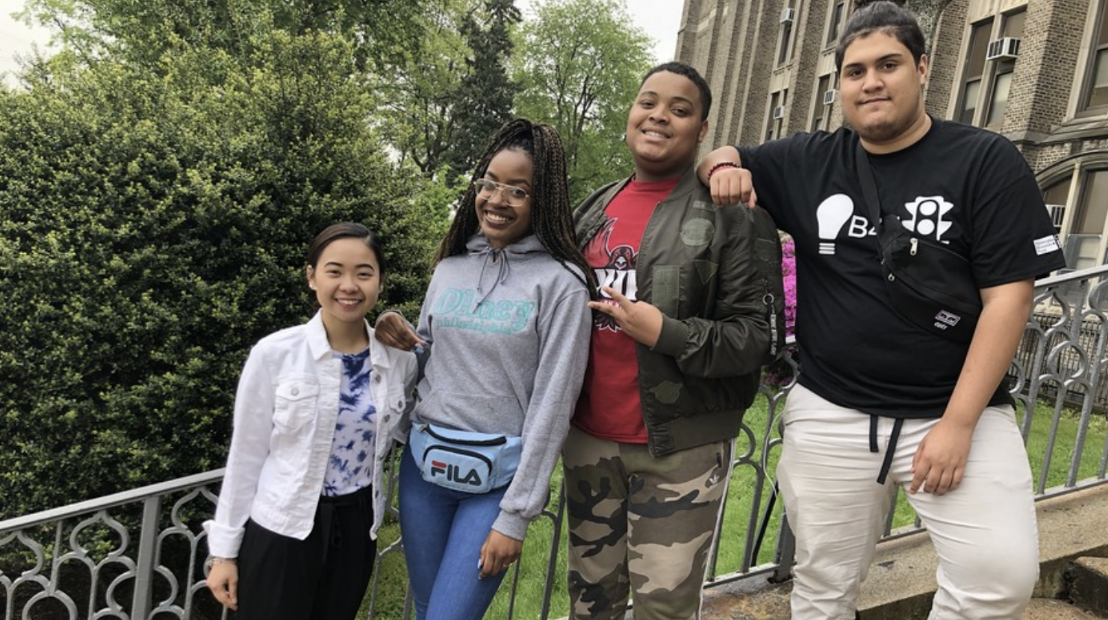 MarketWatch
In a north Philadelphia neighborhood where many parents don't have a bank account, a teacher started a personal-finance program that not only teaches students the importance of budgeting, saving and investing — but also gives them the opportunity to get paid up to $5,000 a year.
Read Article →I would encourage other students to join because of the life lessons I have learned, especially around saving money. This economics program has made me more thoughtful about my future.